
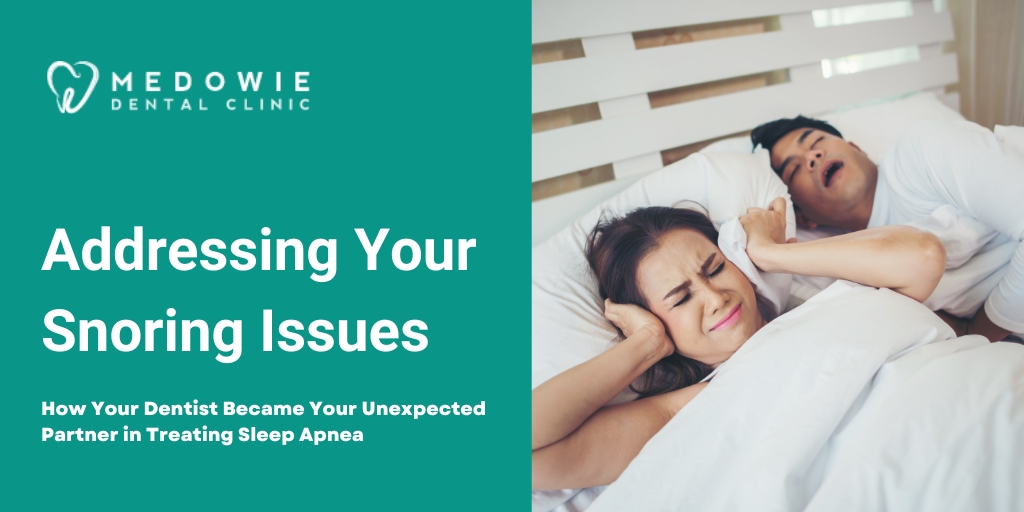
For many years, the sound of snoring has been either a nightly punchline or a source of marital friction. It’s often dismissed as a harmless, albeit annoying, habit of deep sleepers. What few people—and perhaps you, dear reader, are among them—realize is that that nightly noise can be a symptom of a far more serious condition: Obstructive Sleep Apnea (OSA).
The connection between your loud, interrupted sleep and your oral health may seem distant, but the bridge is surprisingly short. In fact, the professional you trust with your bright smile—your dentist—is now playing a pivotal, sometimes life-saving, role in the diagnosis and treatment of this common sleep disorder.
If you or a loved one snore, experience excessive daytime sleepiness, or wake up with a dry mouth and a dull headache, this article will illuminate the profound links between your sleep, your oral health, and how modern Dental Sleep Medicine offers effective, non-surgical solutions like Oral Appliance Therapy (OAT).
The Silent Threat: Understanding Obstructive Sleep Apnea (OSA)
Obstructive Sleep Apnea (OSA) is not just heavy snoring; it’s a medical disorder where breathing repeatedly stops and starts during sleep. This happens when the muscles in the back of the throat relax, causing the soft palate, tongue, and throat tissue to collapse and block the airway. These are called apneic events.
When the airway is obstructed, oxygen levels drop, and the brain partially wakes you up—often with a loud snort or gasp—to restart breathing. This cycle can occur dozens, even hundreds, of times per night, fragmenting sleep and preventing the body from achieving the restorative deep sleep it needs.
The Health Risks Go Far Beyond Fatigue
The consequences of untreated OSA are severe and systemic. It’s not just about being tired. Untreated sleep apnea is a major risk factor for:
- Cardiovascular Disease: High blood pressure (hypertension), heart attack, and stroke.
- Metabolic Issues: Type 2 diabetes and difficulty managing weight.
- Cognitive Impairment: Poor concentration, memory loss, and increased risk of accidents.
- Mental Health: Increased risk of depression and anxiety.
The Unmistakable Link: Snoring and Your Dental Health
While a sleep physician focuses on your airway, a dentist is often the first healthcare professional to spot the physical, oral clues that indicate a serious problem. The mouth is the location of the airway obstruction, and it bears the brunt of the disorder’s side effects.
1. Dry Mouth and the Risk of Cavities
One of the most common signs of a sleep-breathing issue is chronic mouth-breathing due to a partially obstructed nose or throat. When you breathe through your mouth all night, the flow of saliva—nature’s primary defense against bacteria—significantly decreases.
- Diminished Saliva: Saliva neutralizes acids, washes away food particles, and remineralizes tooth enamel. A lack of it leads to a persistently dry mouth.
- Increased Risk: This creates an acidic, bacteria-friendly environment, dramatically increasing the risk of tooth decay (cavities), gum disease (gingivitis/periodontitis), and chronic bad breath (halitosis).
2. Bruxism (Teeth Grinding) and Jaw Pain
Many OSA patients unconsciously clench or grind their teeth at night—a condition known as bruxism. This isn’t a coincidence; experts believe it is a physiological reflex used to reposition the jaw and open the partially collapsed airway.
- Dental Damage: This intense grinding wears down the tooth enamel, flattens the chewing surfaces, causes teeth to crack or chip, and can loosen existing restorations like crowns and fillings.
- Jaw Issues (TMJ/TMD): The chronic strain on the jaw muscles and joints can lead to debilitating Temporomandibular Joint Dysfunction (TMJD), characterized by jaw pain, headaches, and difficulty chewing. Your dentist often sees the tell-tale signs of excessive tooth wear during a routine check-up long before you or your partner recognize the severity of your snoring.
3. Oral Anatomy Clues
During a simple exam, a dentist or sleep dentist is trained to look for anatomical indicators that predispose a patient to OSA:
- Enlarged Tonsils or Uvula: Tissue that crowds the airway space.
- Narrow Palate/Arch Form: A smaller “tongue box” that pushes the tongue backward.
- Macroglossia (Large Tongue) or Scalloped Edges: An oversized tongue or one with indentations caused by pressing against the teeth.
- Retrognathia or Micrognathia: A recessed or small lower jaw that causes the tongue to fall back and block the air passage.
The Dentist’s Role: Screening, Diagnosis, and Treatment
The emerging field of Dental Sleep Medicine has positioned the general dentist as a crucial member of the multidisciplinary team needed to combat sleep-disordered breathing.
Step 1: Screening and Referral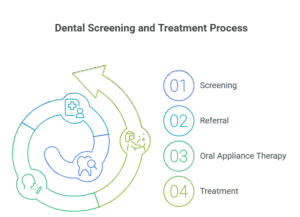
Because patients see their dentist more frequently than their physician, dentists are on the front lines of screening for Obstructive Sleep Apnea.
- Questionnaires: Dentists often utilize screening tools like the STOP-BANG Questionnaire and the Epworth Sleepiness Scale (ESS) to assess a patient’s risk based on symptoms like snoring, body mass index, and neck circumference.
- Intraoral Examination: They look for the physical signs mentioned above—worn teeth, inflammation, and anatomical bottlenecks.
- Referral for Diagnosis: If a high risk is detected, the dentist coordinates with a sleep physician, who is responsible for the definitive diagnosis through a polysomnography (sleep study), which can often be done comfortably at home.
Step 2: Oral Appliance Therapy (OAT) — The Comfortable Alternative
The gold standard treatment for moderate to severe OSA is the CPAP (Continuous Positive Airway Pressure) machine. However, many patients struggle with CPAP intolerance due to discomfort, noise, or claustrophobia.
For patients with mild to moderate OSA, or those who cannot tolerate CPAP, the American Academy of Sleep Medicine (AASM) recommends Oral Appliance Therapy (OAT), delivered by a qualified sleep dentist, as a primary treatment.
What is an Oral Appliance?
An oral appliance, often called a Mandibular Advancement Device (MAD) or Mandibular Repositioning Appliance (MRA), is a custom-fitted device that looks like a retainer or sports mouthguard.
- Mechanism of Action: The device works by comfortably holding the lower jaw (mandible) and the tongue in a slightly forward position.
- Effect: This subtle adjustment mechanically prevents the collapse of the soft tissues at the back of the throat, keeping the airway open and allowing for unobstructed breathing. This significantly reduces or even eliminates snoring and apneic events.
The Advantages of Custom OAT
- Comfort and Compliance: Unlike the mask and air pressure of a CPAP, a custom-fitted appliance is small, quiet, portable, and generally very well-tolerated, leading to high patient adherence.
- Effectiveness: Custom appliances are proven to be highly effective for most patients with mild to moderate OSA and are often covered by medical insurance.
- Non-Invasive Solution: It provides a revolutionary alternative to surgery or lifelong dependence on a CPAP machine for many individuals.
Your Next Step: Don’t Just Treat the Snoring, Treat the Cause
The noise of snoring is a powerful alarm bell that should never be ignored. It’s a sign that your airway, your sleep, and potentially your long-term health are at risk.
If your partner complains about your snoring, or if you regularly suffer from morning headaches, a chronic dry mouth, and overwhelming excessive daytime sleepiness, it is time to have a serious conversation. Your journey to a restful night’s sleep and improved overall health doesn’t necessarily start with a sleep specialist—it can and should begin with a visit to your dentist.
A professional in Dental Sleep Medicine can screen for the subtle, yet serious, signs of Obstructive Sleep Apnea, work with your physician on diagnosis, and provide a tailor-made, effective solution like the Mandibular Advancement Device. Protecting your smile and safeguarding your health are now tasks that go hand-in-hand. Don’t wait; take the first step toward breathing easy and sleeping soundly tonight.
Would you like to search for local sleep dentists in your area who specialize in Oral Appliance Therapy?
Connect to your local trusted dentist or book an appointment with dental specialist