

Persistent Bad Breath? Finding Professional Halitosis Treatment in Medowie, NSW
We have all experienced that fleeting moment of self-consciousness—the subtle lean away from a colleague or the frantic search for a piece of gum before a date. For most people in Medowie, bad breath is a temporary inconvenience caused by a garlicky lunch. But for many others, it is a persistent, frustrating condition that won’t go away, regardless of how many mints they consume.
In the dental world, we call this halitosis. It isn’t just a social hurdle; it is a biological signal that something in your oral ecosystem needs attention. If you are searching for bad breath cures that actually work, it’s time to look beyond the grocery store aisle and understand the clinical science behind a fresh smile.
1. What Exactly is Halitosis?
To solve a problem, you must first understand its source. Halitosis is the clinical term for an unpleasant odor exhaled through the breath. While many people think it’s just about “smelly food,” the reality is much more scientific.
Your mouth is home to a complex microbiome. Most of these bacteria are harmless, but some are “anaerobic,” meaning they thrive in oxygen-poor environments like deep gum pockets or the back of your tongue. These bacteria eat proteins found in food, saliva, and blood, releasing waste products called Volatile Sulfur Compounds (VSCs).
Essentially, when you smell bad breath, you are smelling sulfur. Common VSCs include:
- Hydrogen Sulfide: The classic “rotten egg” smell.
- Methyl Mercaptan: A scent similar to rotting cabbage.
2. Common Bad Breath Causes: Why the Smell Persists
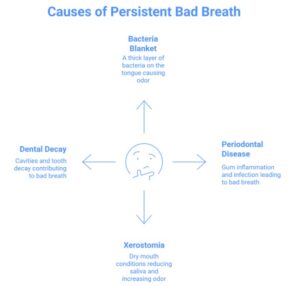
If you’ve been diligent with your oral hygiene but still struggle with chronic bad breath, one of these four dental issues is likely the culprit:
A. The “Bacteria Blanket” on the Tongue
Your tongue is not a smooth surface; it is covered in thousands of tiny bumps called papillae. These bumps create a massive surface area that traps food debris and dead skin cells. This creates a “biofilm” or a white coating on the tongue. In about 80–90% of dental-related halitosis cases, the odor is produced by bacteria living on the very back of the tongue.
B. Periodontal (Gum) Disease
This is a leading cause of persistent odor. When plaque and tartar build up, your gums become inflamed (gingivitis). If left untreated, the gums pull away from the teeth, creating deep “periodontal pockets.” These pockets are impossible to clean with a standard toothbrush, allowing stinky bacteria to colonize and grow undisturbed.
C. Xerostomia (Dry Mouth)
Saliva is your mouth’s natural detergent. It neutralizes acid and physically flushes away the bacteria that cause smells. If you suffer from dry mouth—common in Medowie’s warmer months or as a side effect of medications—the bacteria stay in your mouth longer, leading to a much stronger odor.
D. Dental Decay and Faulty Dental Work
A cavity is essentially a hole in your tooth that traps rotting food. Similarly, an old, cracked filling or an ill-fitting crown can create a “trap” that no amount of brushing can reach. Until a dentist repairs the tooth, the smell will remain.
3. Professional Halitosis Treatment in Medowie
When “at-home” remedies fail, professional intervention is the only way to achieve a permanent cure. Here is how a Medowie dental professional approaches the problem:
Clinical Deep Cleaning
If the source of the smell is gum disease, a standard cleaning isn’t enough. We perform Scale and Root Planing. This involves removing tartar from beneath the gum line and smoothing the tooth roots to prevent bacteria from re-attaching. This “resets” your oral health and usually eliminates the odor-causing pockets.
Identifying “Food Traps”
Your dentist will use X-rays and a clinical exam to find hidden cavities or failing dental work. By sealing these holes, we remove the hiding places for anaerobic bacteria.
Prescription-Strength Rinses
Unlike supermarket mouthwashes that contain high amounts of alcohol (which can dry your mouth and actually make breath worse), a dentist can prescribe rinses containing Chlorine Dioxide or Zinc. These ingredients don’t just mask the smell; they chemically break down the sulfur compounds.
4. Your 7-Day Oral Hygiene Checklist for Fresh Breath
If you want to reclaim your confidence, try this dentist-recommended routine for one week.
| Day | Task | Why it Works |
| Day 1 | Buy a metal tongue scraper. | It removes 75% more odor-causing bacteria than a toothbrush. |
| Day 2 | Floss before bed. | Removes the rotting food between teeth that causes 40% of the odor. |
| Day 3 | Switch to an alcohol-free rinse. | Keeps your mouth hydrated so saliva can do its job. |
| Day 4 | Drink 2 liters of water. | Flushes away the VSCs (sulfur gases) throughout the day. |
| Day 5 | Clean your toothbrush. | Ensure you aren’t putting bacteria back into your mouth. |
| Day 6 | Avoid “trigger foods” (Onions, Coffee). | Helps you identify if the smell is diet-based or chronic. |
| Day 7 | Book a professional checkup. | To find the hidden issues like cavities or gum pockets. |
5. Lifestyle Factors and Hidden Triggers
Sometimes, the smell isn’t about how well you brush, but what you put in your body.
- The “Keto” Breath: Low-carb diets cause the body to burn fat, releasing “ketones.” This creates a metallic or fruity smell that no amount of flossing will fix.
- Coffee and Alcohol: Both are diuretics that cause dry mouth. Alcohol, in particular, breaks down into compounds that are excreted through the lungs, meaning the smell is coming from your breath inside your body.
- Smoking: Tobacco doesn’t just smell like smoke; it dries the mouth and is the #1 cause of gum disease, which leads to a double-whammy of bad breath.
6. When Bad Breath Isn’t a Dental Issue
While 90% of cases are dental, the remaining 10% can be a sign of a medical condition. If your dentist finds your mouth is perfectly healthy but the smell persists, you may need to see a doctor for:
- Sinus Infections: Post-nasal drip can coat the back of the throat in mucus that bacteria love to eat.
- Tonsil Stones: Small white “stones” that form in the folds of your tonsils and smell like sulfur.
- Acid Reflux (GERD): Stomach acid rising into the throat carries a distinct sour smell.
- Systemic Issues: Rare cases of liver or kidney issues can produce a “musty” or “ammonia” scent.
7. Why Fresh Breath Matters for Your Health
In Medowie, we see many patients who are embarrassed to bring up bad breath. However, treating halitosis isn’t just about social confidence—it’s about preventing tooth loss and systemic inflammation. Chronic bad breath is often the first warning sign of gum disease, which is linked to heart disease and diabetes.
By taking your oral hygiene seriously and seeking professional halitosis treatment, you aren’t just freshening your breath; you are protecting your overall health.
Conclusion: Take the First Step Toward Confidence
Bad breath is a solvable problem. It requires a combination of the right tools at home—like a tongue scraper and a high-quality electric toothbrush—and professional guidance to ensure there aren’t hidden pockets of bacteria.
Fresh breath tips to remember:
- Hydrate: Water is your mouth’s best cleaner.
- Scrape: Don’t just brush your teeth; clean your tongue.
- Visit: Professional cleanings reach where you cannot.
Ready for a fresh start?
If you are tired of hiding your smile or worrying about your breath, it’s time to connect with a dental expert.