

Dental emergencies can strike without warning. Whether it’s throbbing pain, a chipped tooth, or a lost filling, these sudden and severe incidents are disorienting and highly distressing. Medowie Dental is fully prepared for such eventualities, understanding the critical nature of these situations. We are equipped to provide prompt and empathetic emergency dental care precisely when you need it most
What Exactly Constitutes a Dental Emergency?
It’s not always easy to tell if a dental issue is truly an emergency or if it can wait for a regular appointment. Generally, a dental emergency is any oral health problem that requires immediate attention to save a tooth, stop severe pain, or prevent further complications. Ignoring these signs can lead to more extensive and costly treatments down the line, and in some cases, can even impact your overall health.
Here’s a breakdown of common dental emergencies and why they require urgent care:
- Severe Toothache: This is perhaps the most common reason people seek emergency dental care. A persistent, throbbing, or sharp toothache that doesn’t subside with over-the-counter pain relievers is a red flag. It often indicates an underlying issue like deep decay, an infection, or even an abscess. Left untreated, an infection can spread, leading to swelling in the face or jaw, and in severe cases, can become life-threatening.
- Why it’s an emergency: Unbearable pain signifies a significant problem. Ignoring it can lead to worsening infection, potential tooth loss, and even systemic health issues.
- Knocked-Out Tooth (Avulsed Tooth): This is one of the most time-sensitive dental emergencies. If a permanent tooth is completely dislodged from its socket due to trauma, acting quickly is crucial for the tooth to be successfully re-implanted. The sooner you get to a dentist (ideally within 30-60 minutes), the higher the chance of saving the tooth.
- What to do immediately:
- Handle with Care: Pick up the tooth by the crown (the chewing surface), never by the root. Touching the root can damage vital tissues.
- Rinse Gently: If the tooth is dirty, gently rinse it with water – do not scrub or use soap.
- Re-insertion (If Possible): If you can, try to gently re-insert the tooth into its socket. Bite down gently on gauze or a clean cloth to hold it in place.
- Keep it Moist: If re-insertion isn’t possible, place the tooth in a small container of milk, your own saliva, or a tooth preservation solution (like Hank’s solution or Save-A-Tooth). Do not store it in plain water, as this can damage the root cells.
- Contact Us Immediately: Call Medowie Dental right away and head straight to our clinic.
- What to do immediately:
- Chipped, Cracked, or Broken Tooth: While a small chip might not seem like an emergency, a larger chip or a crack can expose the sensitive inner layers of your tooth, leading to pain, sensitivity, and a risk of infection. A broken tooth, especially if accompanied by severe pain or a sharp edge that cuts your tongue or cheek, requires immediate attention.
- What to do immediately: Rinse your mouth with warm water. If there’s swelling, apply a cold compress to the outside of your mouth. If the break has created a sharp edge, you can cover it with dental wax (available at pharmacies) to prevent cuts to your mouth.
- Lost Filling or Crown: If a filling or crown falls out, the underlying tooth structure is left exposed and vulnerable. This can lead to pain, sensitivity to temperature or pressure, and an increased risk of decay or infection.
- What to do immediately: Keep the lost filling or crown if you can. Rinse your mouth with warm salt water. Avoid chewing on the affected side. You can temporarily fill the cavity with dental wax or sugar-free gum to protect the exposed area until you see us.
- Dental Abscess (Pimple on the Gums): An abscess is a pocket of pus caused by a bacterial infection. It can appear as a painful, swollen bump on your gums, often accompanied by a foul taste in your mouth, fever, and facial swelling. This is a serious condition that can spread rapidly and affect your overall health.
- What to do immediately: Rinse your mouth with warm salt water to help draw the pus to the surface and provide some relief. Do not try to pop the abscess.Banish Toothache: Your Local Root Canal Treatment Options Near MedowieYour Smile, Our Passion: Medowie Dental, Your Local Care Hub
- Gum Swelling or Bleeding: While minor gum bleeding during brushing can be a sign of gum disease, sudden, severe, or persistent gum swelling and bleeding, especially if accompanied by pain or pus, could indicate a serious infection or abscess in the gums.
- Why it’s an emergency: Potential for severe gum infection (periodontitis) or abscess requiring urgent drainage and treatment.
- Objects Caught Between Teeth: Sometimes, a piece of food or another object can become firmly lodged between your teeth, causing significant pain and pressure. If flossing doesn’t dislodge it, it can lead to gum irritation, swelling, and even infection.
- What to do immediately: Try to gently remove the object with dental floss. Do not use sharp instruments, as this can damage your gums or teeth.
- Broken Jaw: While less common, a broken jaw is a severe medical emergency that requires immediate attention at the nearest hospital emergency room. Symptoms include severe pain, swelling, bruising, difficulty opening or closing your mouth, and a change in how your teeth fit together.
- What to do immediately: Immobilize the jaw as much as possible, perhaps by wrapping a bandage under the chin and over the top of the head (ensuring it can be easily removed if nausea occurs). Apply ice to control swelling. Seek immediate medical attention.
What to Do While Waiting for Your Emergency Appointment at Medowie Dental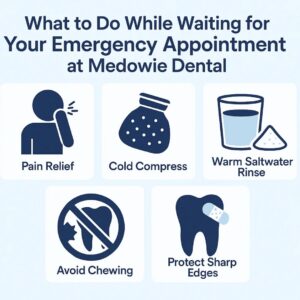
Once you’ve contacted us for an emergency appointment, there are a few things you can do to manage your symptoms and prevent further damage:
- Pain Relief: Over-the-counter pain relievers like ibuprofen or paracetamol can help manage pain. Always follow the dosage instructions.
- Cold Compress: For swelling, apply a cold compress or ice pack to the outside of your cheek in 20-minute intervals (20 minutes on, 20 minutes off).
- Warm Saltwater Rinse: Rinsing your mouth with warm salt water can help clean the area, reduce inflammation, and provide temporary relief for many dental issues.
- Avoid Chewing: Try to avoid chewing on the affected side of your mouth to prevent further irritation or damage.
- Protect Sharp Edges: If a broken tooth has a sharp edge, you can cover it with dental wax (available at most pharmacies) to protect your tongue and cheeks.
Why Choose Medowie Dental for Your Emergency Needs?
At Medowie Dental, we prioritise your urgent care. We aim to:
- Provide Same-Day Appointments: We strive to accommodate dental emergencies with same-day appointments whenever possible to address your pain and prevent further complications.
- Offer Prompt and Efficient Care: Our experienced team understands the stress of a dental emergency and works efficiently to diagnose the issue and provide effective treatment.
- Utilise Advanced Technology: We use modern diagnostic tools and treatment techniques to ensure accurate and comfortable care, even in emergency situations.
- Prioritise Your Comfort: We are committed to making your emergency visit as comfortable as possible. Our compassionate team will guide you through every step, addressing any anxieties you may have.
Don’t Delay – Call Medowie Dental Immediately!
Dental emergencies are rarely convenient, but delaying treatment can often lead to more severe pain, wider infection, and more complicated (and expensive) procedures down the line. If you’re experiencing a dental emergency, don’t wait for the problem to worsen.
At Medowie Dental, your oral health and comfort are our top priority. We’re here to provide the urgent care you need, when you need it most.
For urgent dental care, please call Medowie Dental directly. Our team is ready to assist you.